
Concrete Contractor in South Holland, IL - Slabs Built for Sandy, Wet Ground
Highland Concrete is a concrete contractor building driveways, patios, walks, steps and foundations in South Holland, IL. We start every job with the ground under the slab, because that decides how well it holds up.
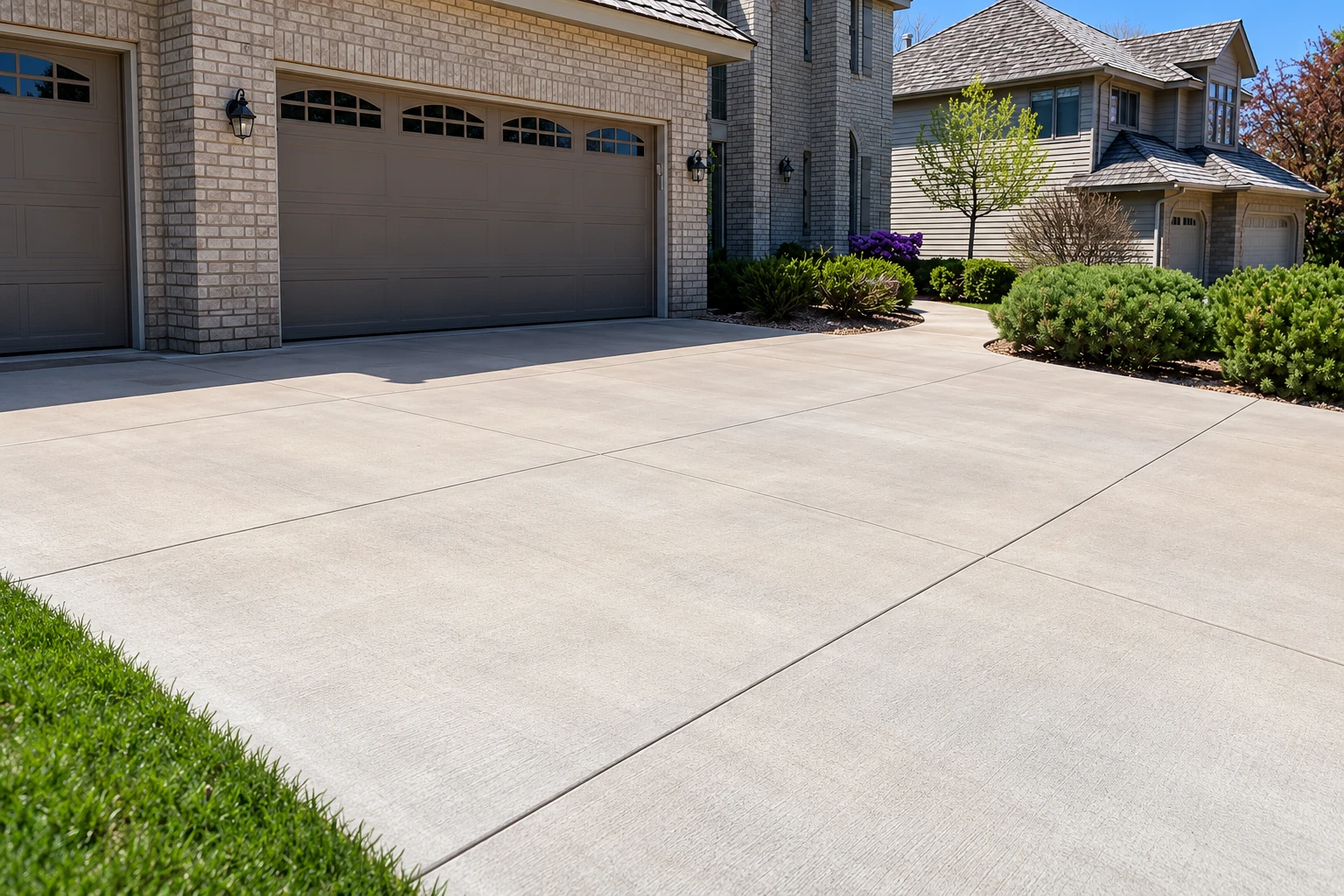
Concrete work in South Holland, Illinois
South Holland is a village with its own government and its own Village Hall, and most of the streets we work on there are lined with single-family homes. Each one has a driveway, a back patio, a front walk and steps that take a beating over the years, and we also hear from small business and property owners who need a lot or an entry redone. As a concrete contractor based in Highland, IN, we come over the state line for these jobs, and we do the same work nearby in Lansing and Calumet City.
The ground shapes the job here more than anything. The Calumet Region is dune-and-swale country, with sandy ridges that drain well, left behind when the ancient lake before Lake Michigan pulled back, and low, wet swales between them. So I don't assume anything about a lot until I've walked it and seen where the water sits. Then our crew digs out and packs the subgrade, the ground the slab sits on, to suit what's actually there.
What we pour in South Holland
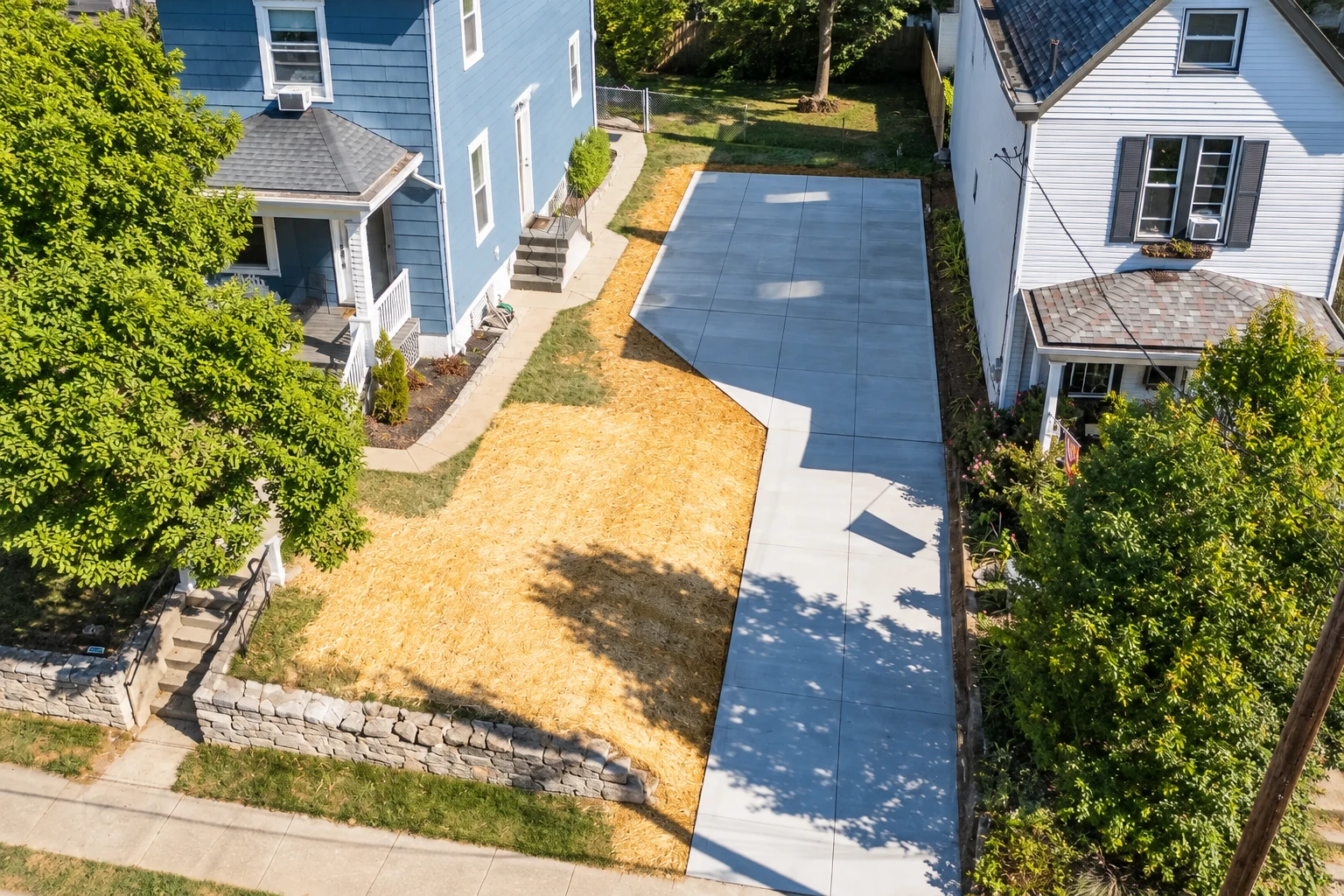
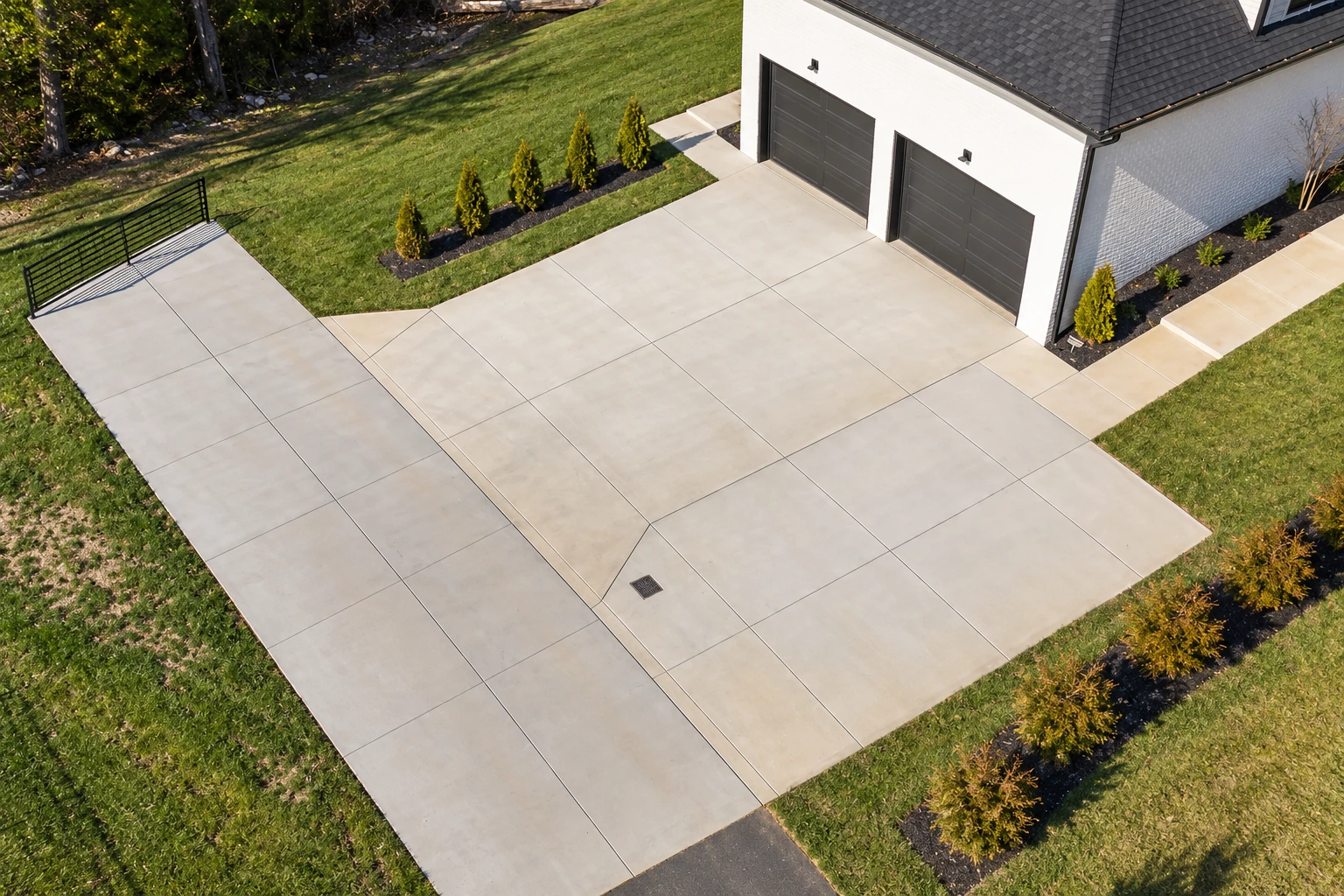
Driveway calls here usually start with a slab that sank or cracked across, so we tear out the old concrete and rebuild the base before the new pour.
A back patio should shed rain away from the house, so we set the slope before we pour and check where the yard sends water.
Stamped concrete presses a stone or brick pattern into the surface, and on a patio or front walk here it holds up best over a well-packed base.
When a front walk has heaved or sunk into a trip hazard, we pull the bad sections and repour them on packed base, level with the steps.
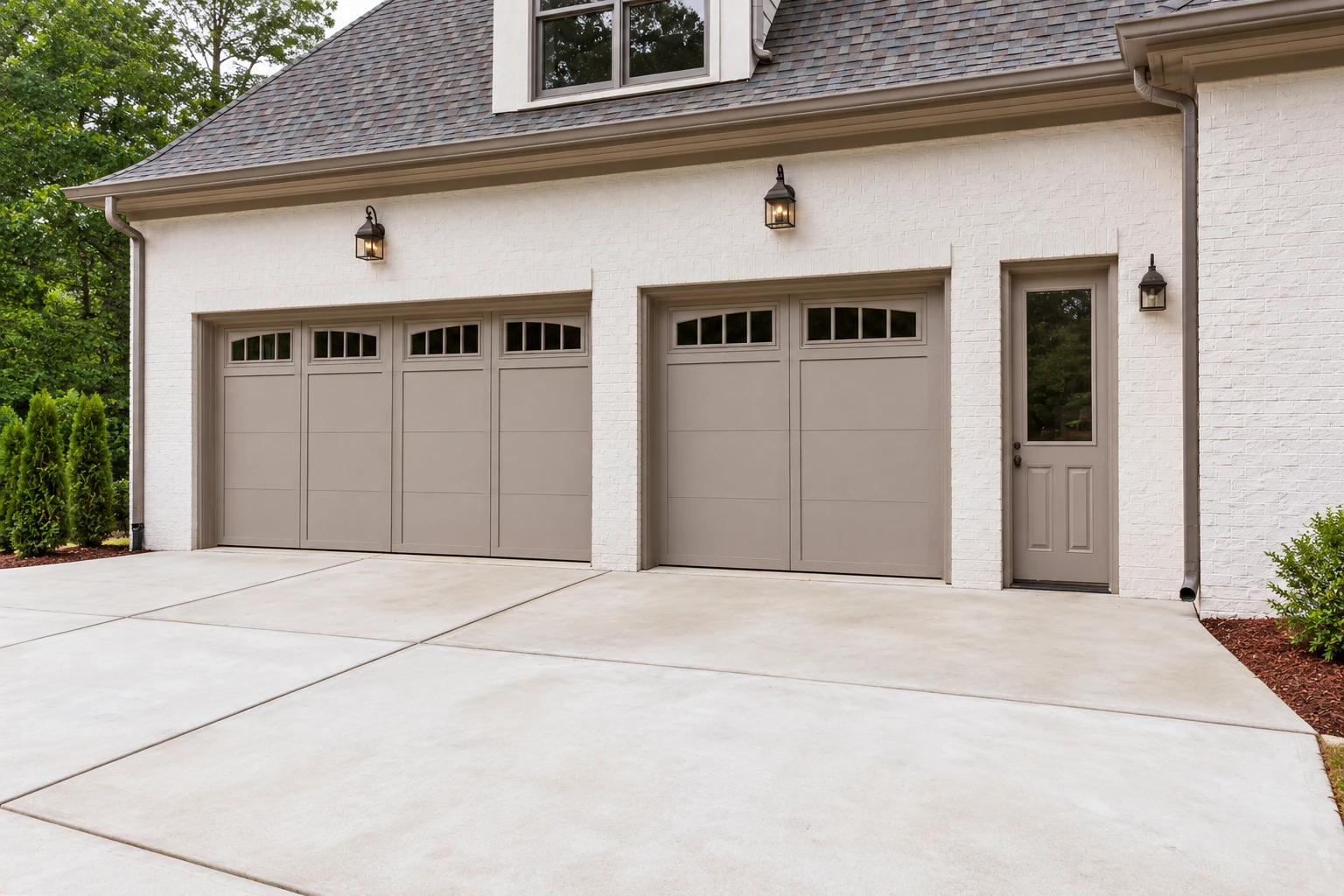
Garage floors take road salt and snow off your car all winter, so we pour the new floor with a slight fall toward the door to drain it.
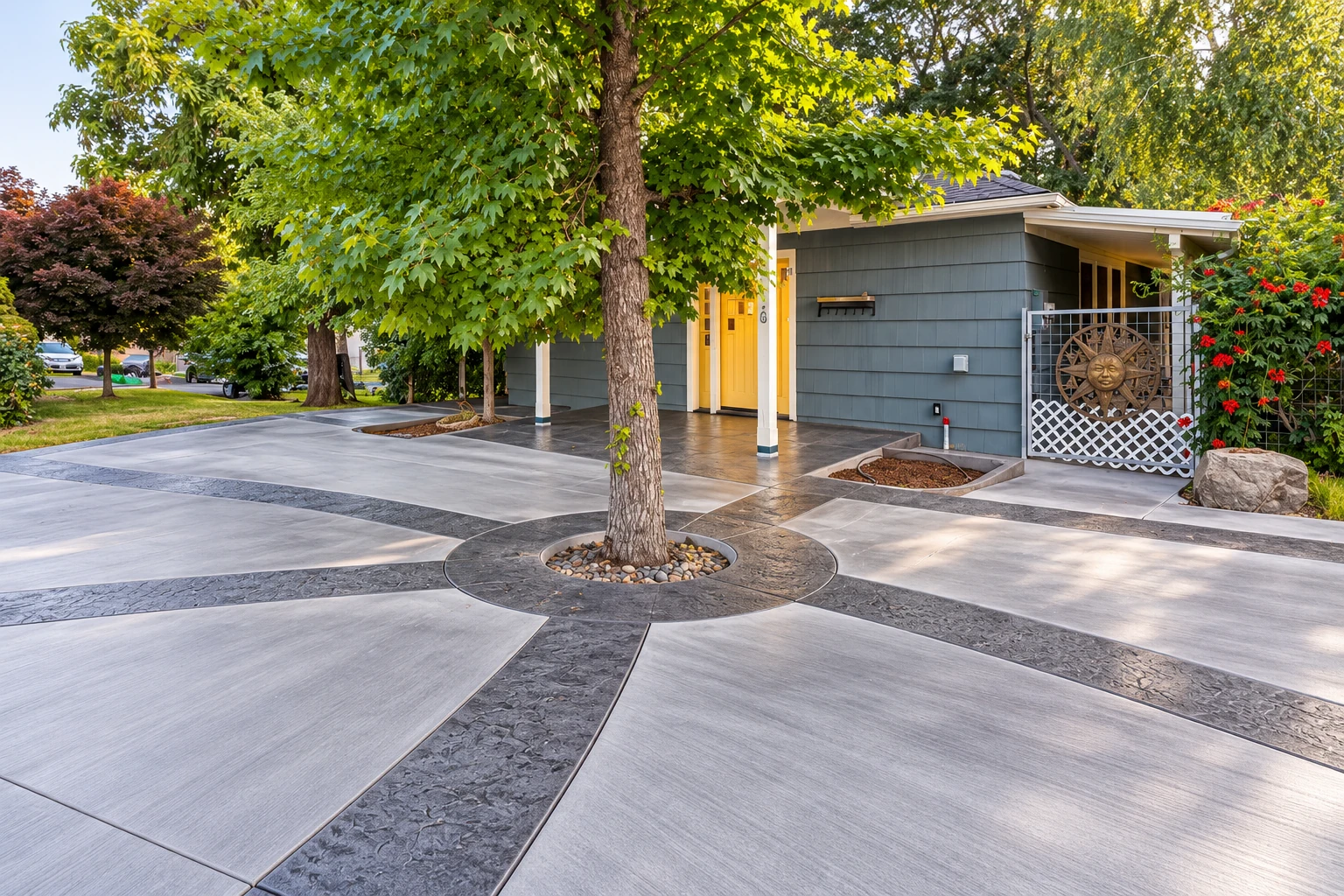
Colored concrete and decorative finishes can dress up an entry or patio, and I'll tell you which ones hold up to our winters and which need more care.
Where a yard steps down toward a lower, wetter spot, a retaining wall needs drainage behind it, or the water pushes on it until it leans.
We pour interior floors for basements, additions and shops, and in tight spaces we plan how the concrete gets in before the truck ever shows up.
A pool deck has to drain away from the water and feel safe barefoot, so we slope it and pick a finish with grip that's easy on feet.
When front steps pull away from the house or crumble at the edges, we rebuild them on footings, buried concrete pads that carry the weight.
For a garage, shed or addition, a slab foundation starts with packed subgrade and rebar, steel bars inside the concrete that hold it together if it cracks.
New foundations for additions and garages get our closest look at what's underneath, because a soft, wet corner of the lot shows up later as a cracked wall.
Small business and property owners call us for lots and drive aisles, where heavier traffic means a thicker slab and a base built for trucks, not just cars.
Before a deck, porch or addition goes up, we pour the footings it stands on, dug to firm ground instead of soft soil near the surface.
If one corner of a slab or foundation has dropped toward a low, wet part of the yard, we find out why before we lift it to level.
We saw out broken sections, cut openings for doors and drains, and cut control joints, shallow grooves that give a slab a planned place to crack.
What South Holland ground asks of concrete
I walk every job with you and put in writing what the price includes. Size, tearing out the old slab and how much base the ground needs move the price most, and weather moves the date.
On site from prep to finish
I'm with our crew for the prep, the pour and the finish, so I see the base before concrete covers it.
Sized to how you use it
We ask whether a slab carries a truck, a basketball hoop or a grill, and build the thickness and base to match.
The wet yards others skip
We take the jobs other crews pass on, like the side yard where water sits after every rain.
Honest no on weak plans
I'd rather tell you a plan won't work and why than pour something that lets you down in a few winters.
Licensed, insured, guaranteed
We work licensed and insured on every job, and we back it with one promise, your satisfaction, guaranteed.
South Holland concrete questions
Where is South Holland Village Hall and when is it open?
South Holland Village Hall is at 16226 Wausau Avenue, South Holland, IL 60473, and it's open Monday through Friday, 9 a.m. to 5 p.m. You can call it at (708) 210-2900. The village has a mayor and a board of trustees, and the village website lists Community Development, Public Works and a Customer Service Center among its departments.
How do I look up South Holland's local rules before a concrete project?
Start with the Code of Ordinances, the village's book of local laws, which the village website lists under its Government menu. If something in it touches your job, bring it up when I come out and we'll talk it through before we set a date.
How much does a new concrete driveway cost in South Holland, IL?
Your driveway's price is set mostly by its size, any tear-out of the old slab, the base work your ground needs and the finish you pick. A low, wet spot that has to be dug out and refilled costs more than firm, sandy ground. If the budget's tight, I'd keep the money in the base and go with a plain broom finish, a light brushed texture that gives grip, because nobody sees the base but you can't fix a bad one without tearing out the slab. I'll write out the price and what it includes when I walk the job.
What causes concrete driveways and patios to sink in South Holland?
Most sinking starts with the base, when the ground under the slab was raked level instead of dug out and packed, so it settles and the concrete drops with it. On the low, wet ground some yards here have, water softens that base further, and a slab that tips toward the house sends rain right where you don't want it. We dig out soft soil, pack the base in layers and check where the water runs before we pour.
How long does it take before I can walk or drive on new concrete?
You can walk on a new slab well before you can drive on it, because concrete keeps gaining strength for days after the pour. That wait is called curing, and heat, cold and rain all change it, which is also why we plan summer pours around the midday heat that leaves a weak, dusty top. Before the pour, I'll tell you when it should be ready to walk on and when to park on it, based on the weather that week.
Will my new concrete patio crack like the old one?
It can still crack, but a well-built slab cracks less and in the places we chose. Concrete shrinks as it cures and moves through freeze and thaw, and the control joints we cut, the grooves mentioned above, keep those cracks on a line instead of across the middle. The big cracks in old slabs usually trace back to a weak base or joints cut too late, and those are the two things I watch most on our pours.
Don't see your city? Call us
We also pour driveways, patios and foundations in the cities below on both sides of the state line. If yours isn't listed, call and ask.
Ask Highland Concrete for an estimate
Our phones are answered evenings and weekends, so call (219) 533-1721 after work or send the form and tell us how you'll use the space.